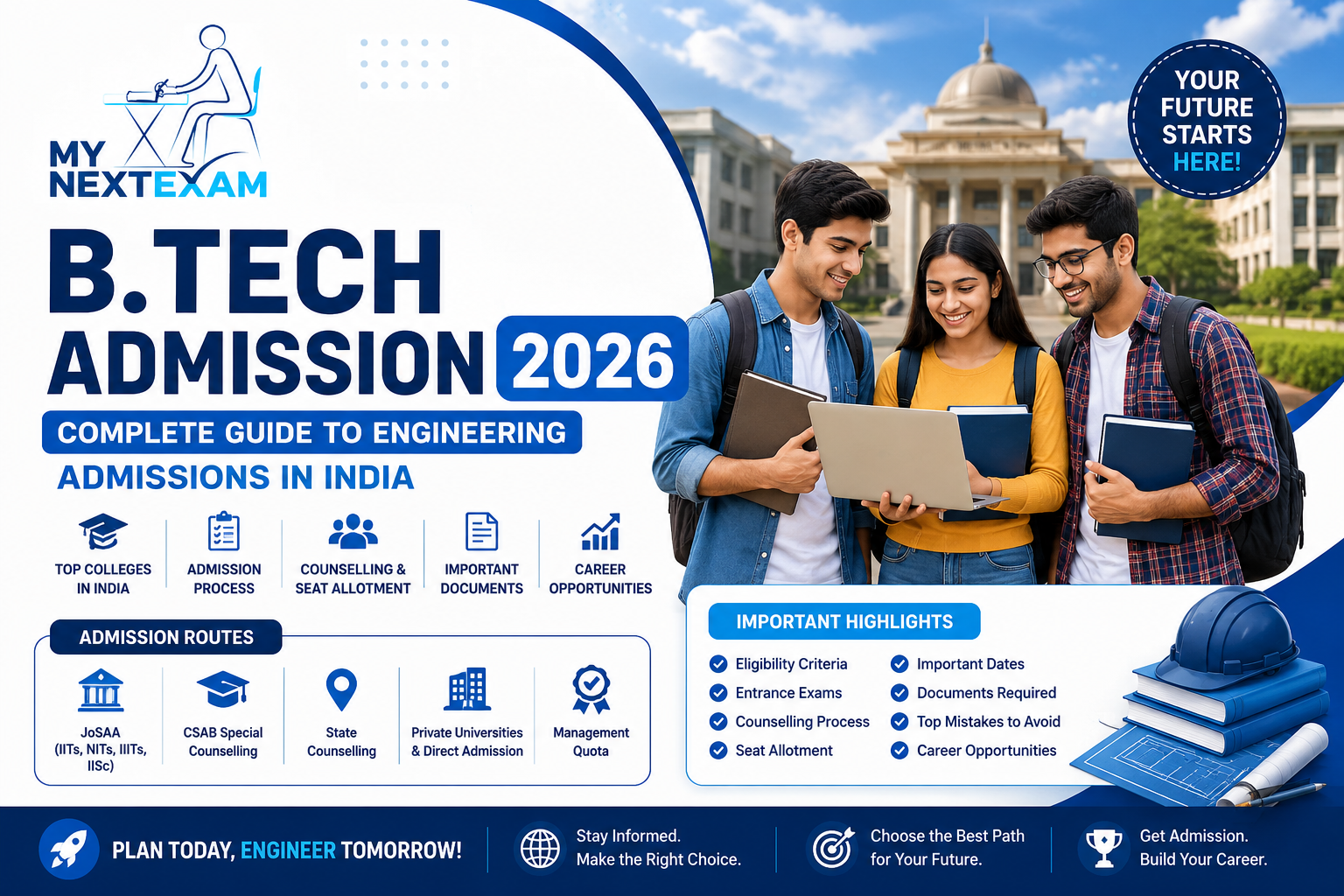
In India, engineering is one of the biggest career options. Students can choose from various opportunities across different fields such as Mechanical Engineering, Civil Engineering, Computer Science, Data Science, Artificial Intelligence and more. There are many admission pathways available to choose from, which can make it tough to understand the engineering admission process for 2026.
Here is a complete guide to engineering admissions in India, covering not only B.Tech Admission 2026 but also JoSAA, CSAB, state counselling, private universities, direct admissions, management quota, important dates, required documents and seat allotment.
B.Tech Admission 2026 Process
A four-year undergraduate degree program, Bachelor of Technology (B.Tech) focuses on technology, innovation and engineering. In this program, students can get classroom lessons along with practical projects, laboratory sessions and industry-oriented training.
They can learn how to use modern tools and technologies. It helps them to develop a variety of skills, including:
· Communication skills,
· Analytical thinking,
· Problem-solving abilities,
· Leadership skills, and
· Teamworking skills
They can also get technical knowledge, which is highly useful in the modern, competitive job market. Engineering professionals can get jobs in various fields, such as finance, manufacturing, artificial intelligence and healthcare.
Eligibility Criteria
Students need to have passed Class 12 or equivalent, and studied these subjects:
· Physics,
· Chemistry, and
· Mathematics
The academic performance of students needs to be according to the admission guidelines of the institute that they apply into. They might have to sit for an entrance exam, wherever needed. Before they submit their applications, they need to check the official admission portal to verify the latest admission requirements.
How is the B.Tech Admission Process 2026 Like?
Here are the steps to follow:
· Aspirants need to visit the official website and register therein.
· They have to explore the various B.Tech programs that are available.
· They need to look at the eligibility criteria.
· Next, they have to fill up the online admission form and upload the necessary documents.
· If applicable, they have to attend the admission verification or counselling process.
· They need to complete all the admission formalities to bring the process to a finish.
Students should apply well before the admission deadline, to ensure that there is sufficient time for document verification.
How to Choose the Best Colleges for the B.Tech Admission Process?
Aspirants have to look at various factors, such as:
Modern Laboratories
Experienced Faculty
Industry Collaborations
Placement Assistance
Internship Opportunities
Research Facilities
Campus Infrastructure
Student Clubs & Activities
Alumni Network, and
Library & Digital Resources
Students need to look for a college that focuses on both practical learning and academics, so that they can choose from the best opportunities after graduation.
JoSAA and B.Tech Admission 2026
B.Tech admissions for the 2026-27 academic session are being regulated by the Joint Seat Allocation Authority (JoSAA) across 138 premier institutes in India. These include:
· IITs,
· NITs,
· IIITs,
· IIEST Shibpur, and
· IISc Bengaluru
Candidates can participate in the centralized, 5-round counseling and seat allocation process if they are qualified in JEE Main (for NIT+ system) or JEE Advanced (for IITs and IISc).
CSAB Special Counselling
For B.Tech admissions to NITs, IIITs, GFTIs and other premier institutions, the Central Seat Allocation Board (CSAB) special counselling works like a crucial second chance. It is designed exclusively to fill up numerous seats that are left vacant after the completion of all rounds of the JoSAA counselling process.
On July 28, 2026, the CSAB 2026 Special Round Counselling process will begin for vacant B.Tech seats in NITs, IIITs, and GFTIs. It is mandatory for students to register themselves on the official website of CSAB before the deadline of August 3, 2026.
State Counselling
Every state conducts its own engineering admission process for government and private colleges. An official process for seat allocation, state counselling is essential for students who aspire to study in engineering colleges.
The state counselling process associates entrance exam scores of students to their college branch. After their participation in a major competitive exam, such as JEE Main or WBJEE, they need to register on the counselling portal of their state, to lock in their college choices, to ensure final admission. State counselling evaluates students’ rank against the seat matrix, reservation quotas and cutoff scores of their state, to determine their final B.Tech admission.
Private Universities, Direct Admission and Management Quota
Private universities and state-affiliated private colleges allot around 15-35% of engineering seats. This is known as Management Quota. It allows admission into B.Tech courses to be directly based on the Class 12 marks of students or institutional criteria, instead of performance in competitive entrance exams. However, students generally need to pay much higher tuition fees to study in these institutions.
Private universities, unlike government universities, have the autonomy to formulate their own admission policies. In the Direct Admission process, students can directly get a seat from the college/university administration without routing through state-level CETs, JoSAA or some other centralized government counseling process. They can bypass stringent rank requirements in this way and need to meet only basic eligibility criteria, based on the state.
Important Dates
Some of the important dates for B.Tech Admission 2026 are:
· IISc B.Tech: Physical reporting and orientation have been scheduled from July 27 to 31, 2026.
· CSAB Special Rounds: These were scheduled across August – September 2026, for filling up vacant seats in IIITs, NITs and GFTIs.
· JEE Main (Session 1): This was completed between January 21 and 29, 2026.
· JEE Main (Session 2): It was conducted between April 2 and 9, 2026.
· JEE Advanced: It was done on May 17, 2026.
· BITSAT: Session 1 was completed from April 15 – 17, 2026 and Session 2 was conducted from May 24 – 26, 2026.
· VITEEE: It was completed from April 28 – May 3, 2026.
Documents Required
Before applying, students have to keep all the documents ready. These include:
Class 10 Marksheet,
Class 12 Marksheet,
Character Certificate,
Transfer Certificate,
Valid ID Proof, such as Aadhaar Card,
Passport-size photographs,
Migration Certificate, if needed,
Category Certificate, if needed
To make the admission process more convenient, you have to keep both printed and digital copies of these documents.
Understanding Seat Allotment
Engineering seat allotment for B.Tech courses is done through centralized counselling, such as state boards like WBJEEB or JoSAA for IITs/NITs. Seats are awarded based on:
· Rank of students,
· Chosen category, and
· Preferred college
Students are supposed to accept their seat, pay the fees and verify their documents, to lock their choices in.
How Does the B.Tech Seat Allocation Process Work?
The process involves the following steps:
· Registration & Choice Filling: Students have to log into the counselling portal. Then, they need to pay a registration fee and list the college and branches of their preferences, in order of priority.
· Mock Allotment: Prior to the actual allotment, mock rounds are often released by authorities. This helps students to find out their real standing, based on their existing choices. It allows them to reorder their options.
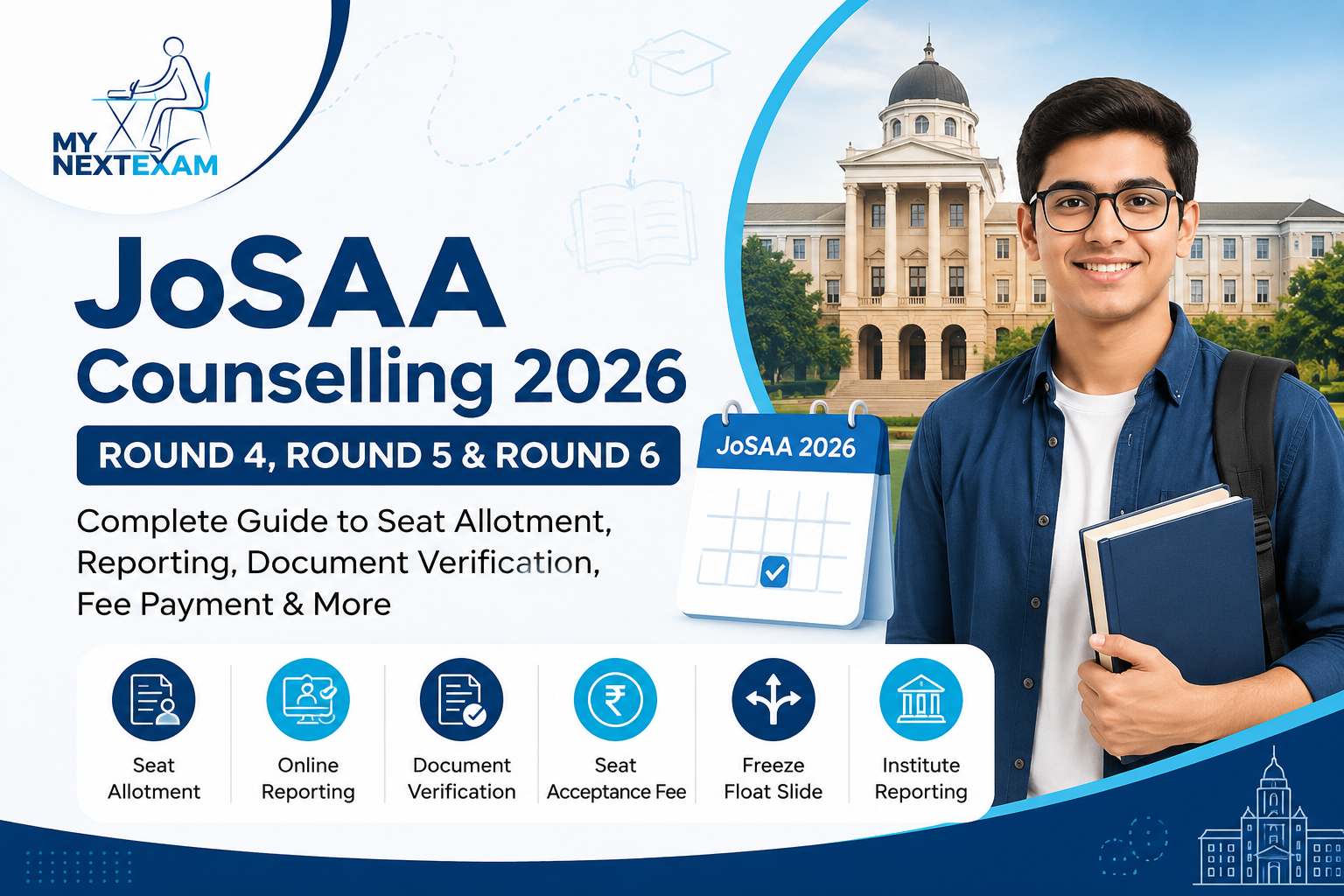
· Seat Allocation Rounds: Multiple rounds are run, generally 3 – 5, for seat allotments. Seat is assigned if students’ rank satisfies the cutoff for their top choice. Else, the system checks their next preference. They can directly access choice filling and results of seat allocation through the Candidate Login Portal for JoSAA.
· Options for Allotted Seats: After seat allotment, students have to pick any of these three options to secure their position.
1. They can choose “Freeze” if they are satisfied with the college and branch, and wish to accept it for the long-term.
2. If they accept “Float”, they accept the allotted seat but prefer to keep participating in future rounds, to secure a seat in a better branch or college.
3. They can choose the “Slide” option if they accept the college but would like to get a seat in a better branch in the same college.
· Document Verification & Fee Payment: If students accept a seat, they have to pay a seat acceptance fee and upload their documents for verification purposes, for finalizing their admission. These important documents usually include:
1. Passport-size Photographs,
2. Class 10 & 12 Marksheets,
3. Class 10 & 12 Pass Certificates,
4. Entrance Exam Rank Card, such as that of JEE Main, WBJEE, etc.,
5. Government Photo ID (Aadhaar Card),
6. Seat Allotment Letter, and
7. Category/Domicile Certificate, if applicable
Students need to check the official website from time to time for the latest updates and information related to the B.Tech admission process.
Final Thoughts
The B.Tech admission process in India allows students to pursue engineering, securing admission to a preferred college and branch of their choice. Stay updated with official counselling schedules and understand each admission route. Take the first step toward a successful technical career.









Leave a comment